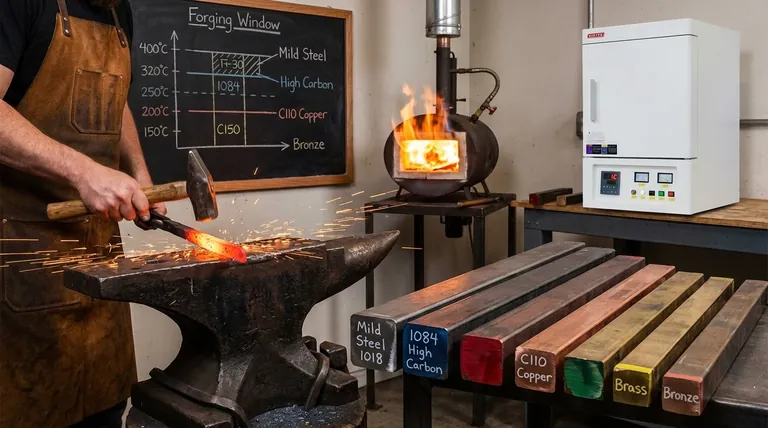
At its core, blacksmithing is possible with any metal that can be heated to a plastic, workable state without fracturing. While many metals can theoretically be forged, the most common and practical choices are iron and various types of steel. Other non-ferrous metals like copper, bronze, and brass can also be worked, but they behave very differently from the steel that defines the craft.
Understanding Plastic Deformation
Blacksmithing works by heating a metal until its internal crystal structure has enough energy to move and rearrange without breaking. This is called plastic deformation.
This is the opposite of a brittle material, like glass or cast iron, which will simply fracture under the force of a hammer blow, regardless of its temperature.
The Critical Role of the "Forging Window"
The forging window is the usable temperature range for a specific metal. Below this range, the metal is too hard and risks cracking. Above this range, the metal can spark, burn, or even melt, destroying its structural integrity.
Mild steel, for example, has a very wide and forgiving forging window (roughly 1700-2300°F or 900-1250°C), making it ideal for beginners. High-carbon steels have a much narrower window, demanding precise temperature control.
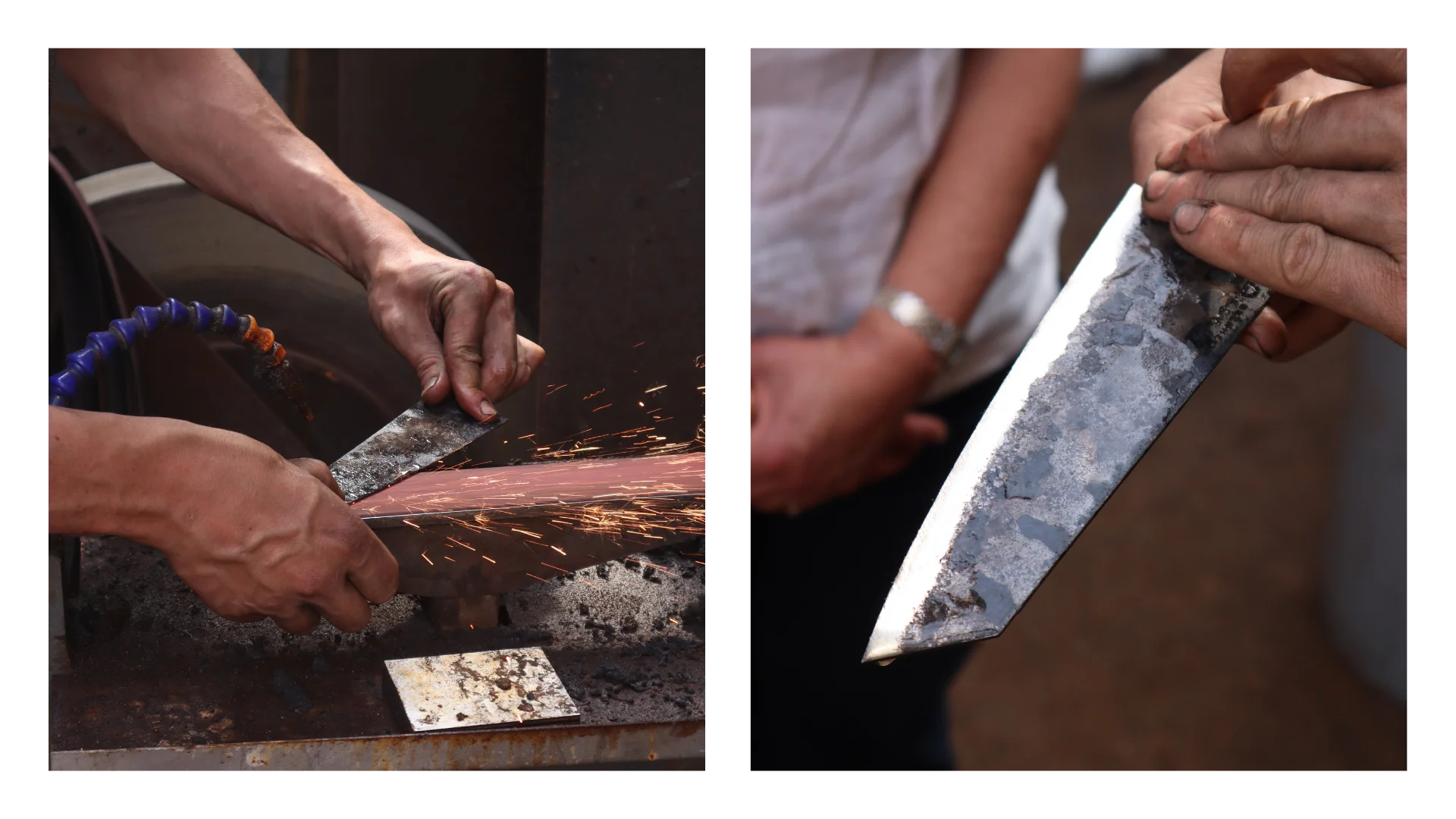
Blenheim Forge founders James Ross-Harris and Jon Warshawsky created their first Japanese knife in the back garden they shared as housemates, in a forge made of fire bricks and a leaf blower. The forge they work in now, located under a railway arch in South London, is far more sophisticated – and so are their Japanese knives, praised by names like Nigella Lawson, Gordon Ramsay, and Argentine barbecue master Francis Mallman.
But that original quality – of friends creating a product entirely from scratch, out of a passion for working with iron and fire – is still there. (Even their machinery was developed in-house, by third co-founder Richard Warner.) The fact they’ve found their own, unique way to master the ancient art of Japanese knife-making is what makes them so remarkable.
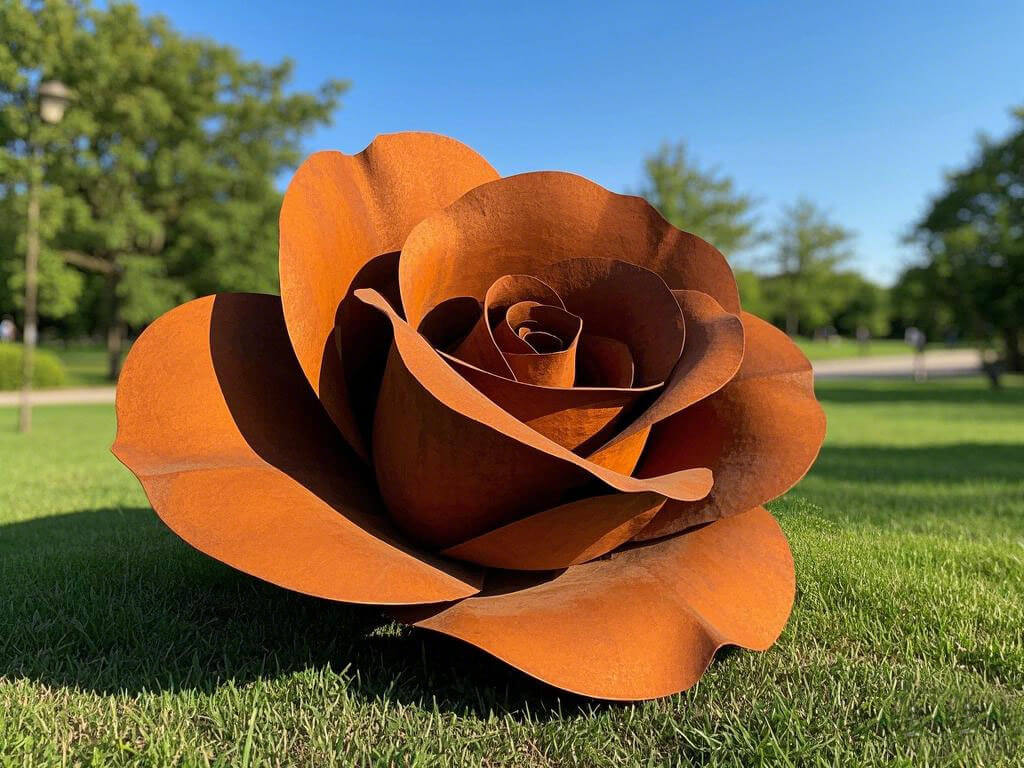
The Corten Steel Rose Forge Sculpture is a distinctive artwork crafted from weathering steel, designed to resemble a blooming rose with a bold and industrial aesthetic. Through precise metal cutting and bending techniques, the sculpture presents the layered, naturally unfurling form of rose petals, giving it a sense of organic movement despite its solid metal construction. The characteristic rust-red patina of corten steel forms a uniform oxidation layer, not only enhancing durability but also creating a raw, time-worn texture that exudes a nostalgic mechanical charm. This weathered surface interacts beautifully with natural light, shifting in tone throughout the day, from deep earthy hues in the morning to warm, glowing rust under the evening sun. Positioned against a backdrop of lush greenery, trees, and open skies, the Corten Steel Rose Forge Sculpture becomes an eye-catching focal point that harmonizes with its surroundings while introducing a striking contrast between nature and industry. Its fusion of organic inspiration and rugged materiality makes it a compelling addition to outdoor spaces, enriching the landscape with depth, artistry, and a timeless sculptural presence.